
Variations Improvisation Course (18th century style)
Self-paced video course to develop your keyboard improvisation skills by mastering 18th century variation techniques over given themes (bass or soprano).
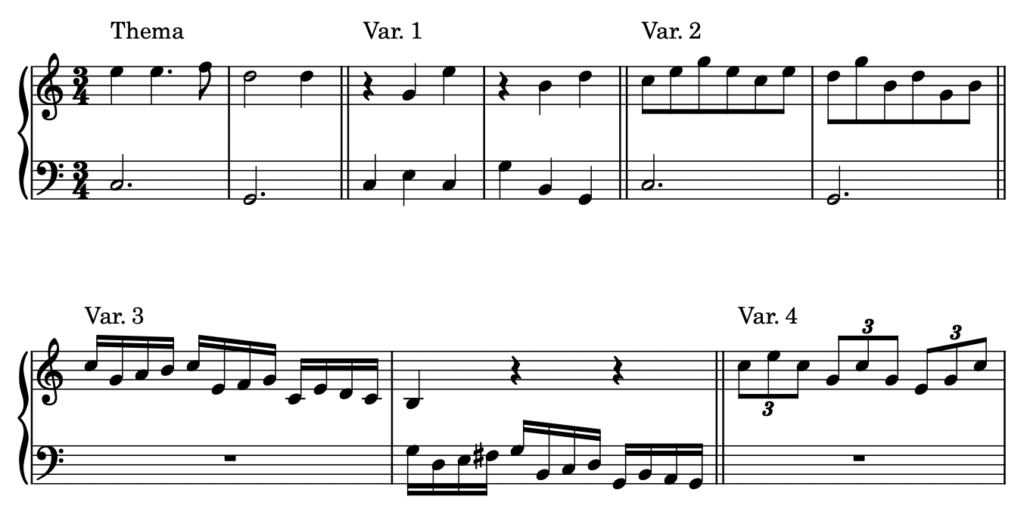
Improvisation of keyboard variations in 18th century style
Develop your keyboard (piano) improvisation skills by mastering 18th century variation techniques over given themes (bass or soprano). Learn artistic figuration methods inspired by composers like Corelli, Niedt, Pachelbel and Händel.
Requirements: Completion of the Foundation course or similar experience with basic harmonic models and improvisation.
Fugue Improvisation
Self-paced video course to learn fugue improvisation through routine, reflection, and long-term practice.
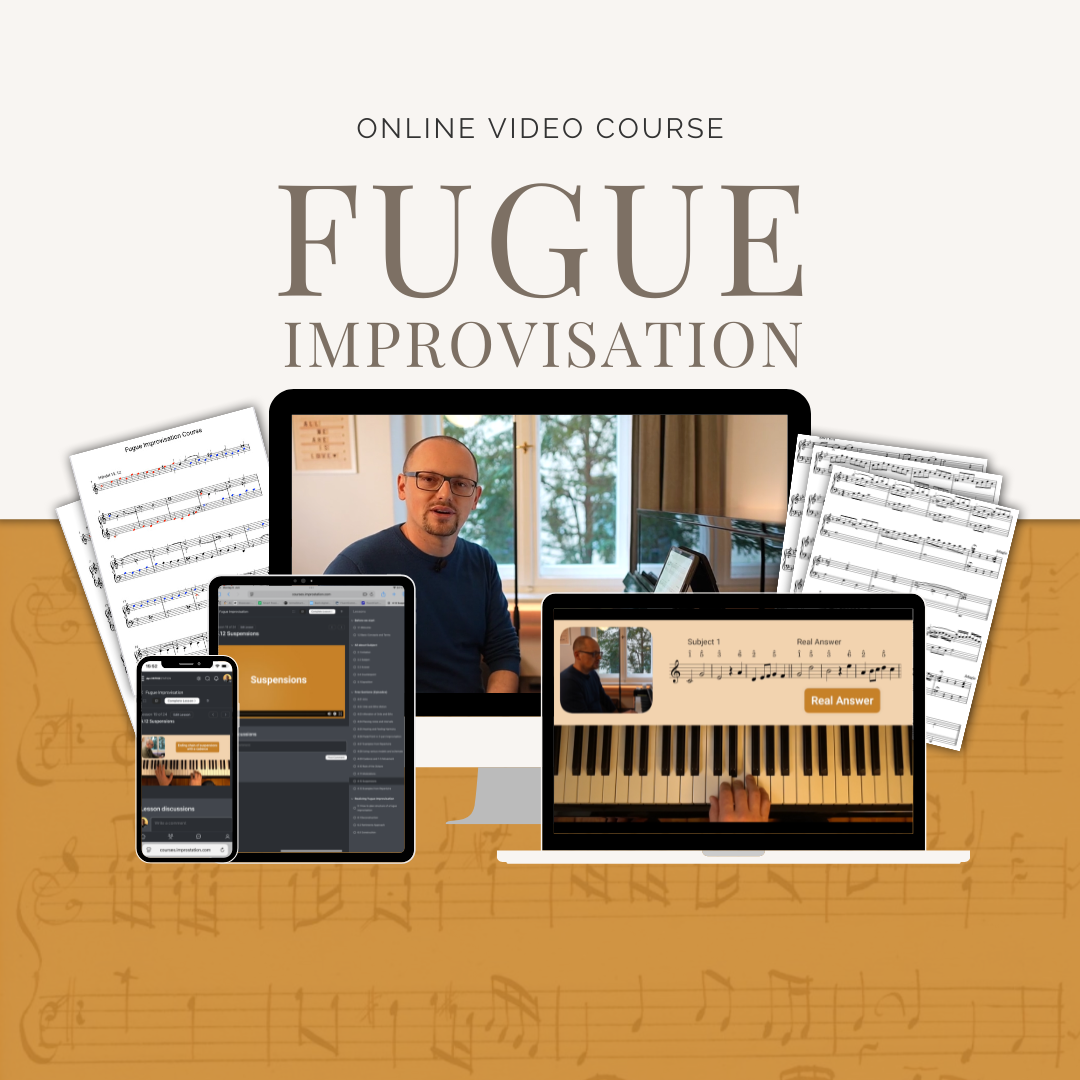
deep work. real skills. lasting results.
Trust the Process
Understanding
Discover the core principles of fugue construction and counterpoint. Theory made clear and accessible.
Exploration
Dive into existing short versets, fugettas and fugues. Analyze, imitate, and experiment with structure.
Creation
Take control of your own musical ideas. Improvise fugues from scratch with confidence and style.
About the course
All Details
Variations Improvisation Course (18th century style)
This Level 2 course is specifically designed for pianists who want to advance their improvisation by focusing on the artistic techniques of baroque variation. You will learn to create sophisticated and expressive improvised variations over a given theme, whether provided in the bass or the soprano voice. The course draws heavily on the style and figuration techniques of 18th-century masters like Corelli, Niedt, Pachelbel and Händel.
🎯 What You Will Learn and Achieve
In this course, you will learn how to:
- Improvise variations over a simple, given theme.
- Master 18th-century figuration techniques to create highly stylized and elaborate textures typical of the Baroque era.
- Apply basic counterpoint techniques to your variations.
- Analyze and use techniques from historical examples to enrich your own improvisational vocabulary.
📦 What’s Included
- 7 Hours of Video Lessons providing focused instruction on variation techniques.
- Lesson Descriptions in PDF format for easy review and reference.
- Lifetime Access to the entire course content.
- Music Database Access: You gain access to a large collection of literature examples that will help you learn the variation techniques better.
- Instructor Support: The course instructor answers your questions three times a week via email or comment on the platform.
- Community Support: You receive support from other members of the private course community.
🎓 Who Is This Course For and What Are the Requirements?
This course is for you if you:
- Have already completed the Foundation of Improvisation course or possess a similar level of experience.
- Have prior experience with improvisation and a solid understanding of music theory.
- Are familiar with the harmonic models and patterns taught in the Foundation course.
- Have experience playing 18th-century music on the piano or other keyboard instruments and are experienced in both listening and performing this repertoire.
14-day money-back guarantee, no questions asked. If you’re not satisfied with the course,I’ll refund your money
Variations Improvisation Course (18th century style)
Lesson 01 – Fifth Up, Fourth Down, Corelli Figuration
Lesson 02 – Falling Tetrachord
Lesson 03 – “Goldberg” Bass
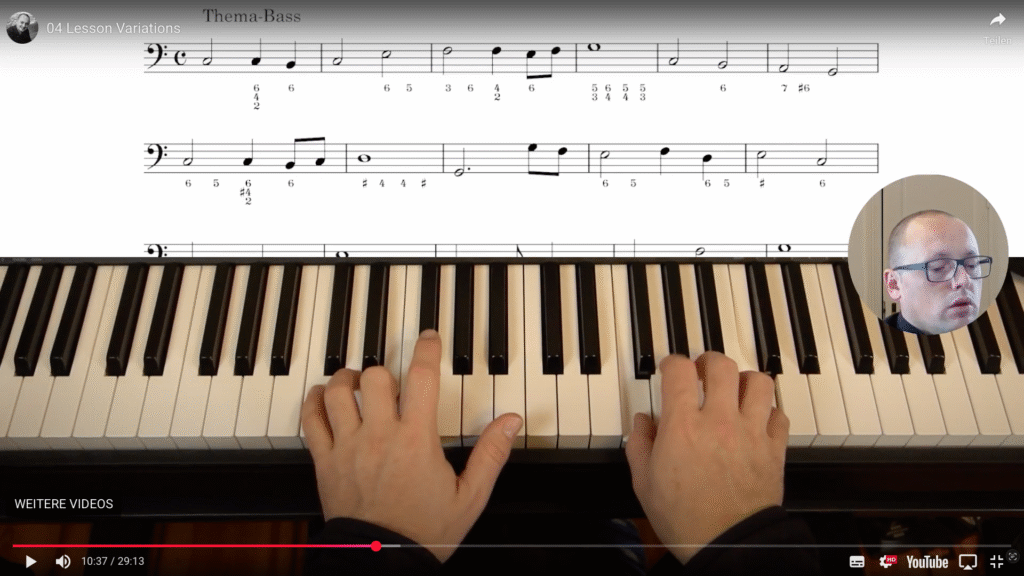
Lesson 04 – One Bass, Different Forms. Niedt Methode
Lesson 05 – Air Variations (to given melody by Händel)
Lesson 06 – Variations to Given Bass: Suite (Niedt-Methode)
Lesson 07 – Passacaglia Variations (to German Folk Song)
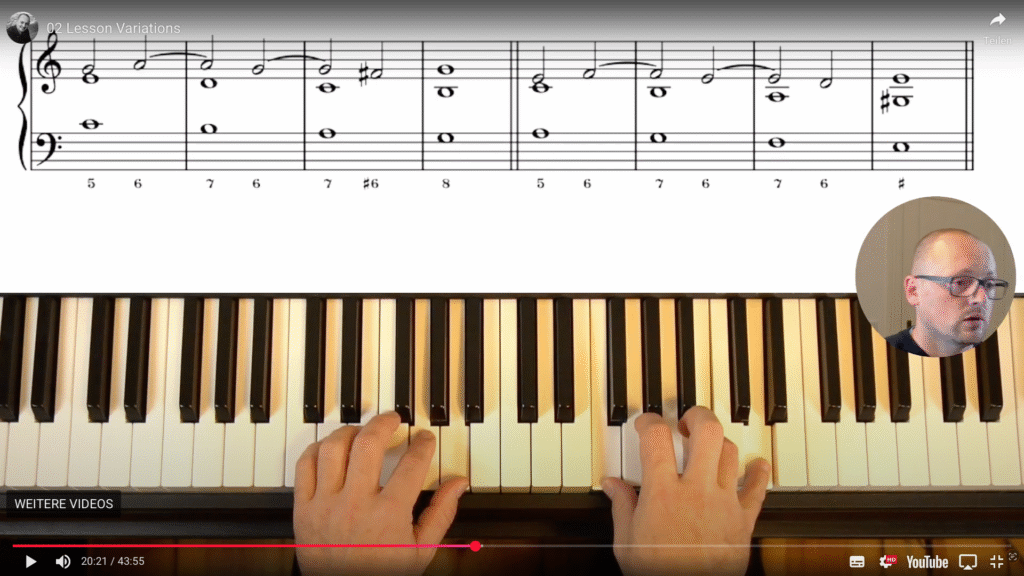
Screenshots
Is This for Me?
Check if this course suits you
Does this sound familiar?
You’ve always wanted to..
Now Imagine If You Could
This Is NOT for You If
Self-paced video course to learn fugue improvisation through routine, reflection, and long-term practice.
FAQ
Frequently Asked Questions
Foundation of Improvisation Course (18th century style)
Self-paced video course to develop your improvisation skills by mastering Baroque Chorale Partitas and Chorale Preludes.